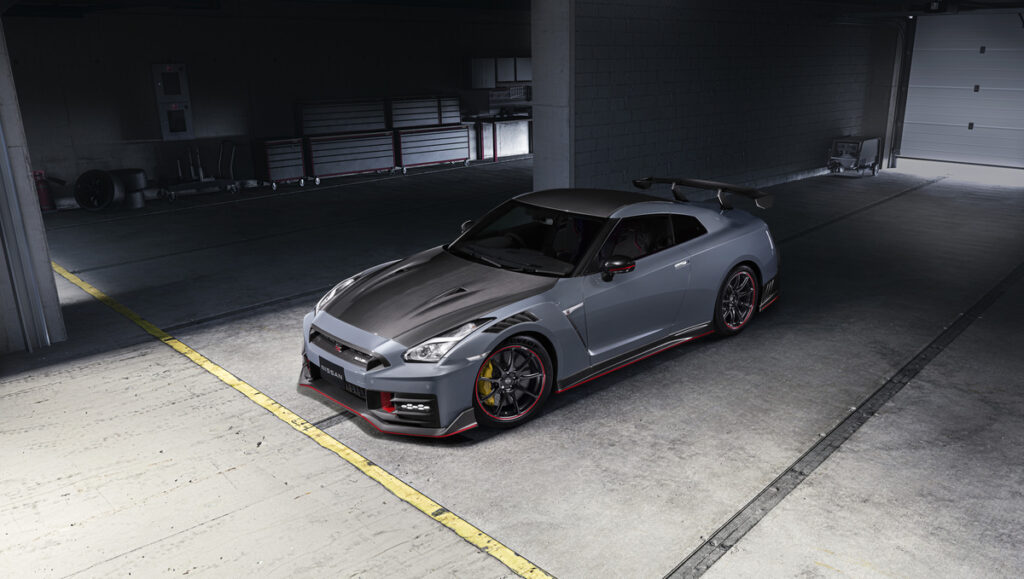
The Nissan GT-R NISMO is the road-going distillation of six decades of Nissan Works motorsport, built by the in-house tuning arm that shares its name with the car. For 2025, it carries a reworked aero package, a front mechanical limited-slip differential, and the same IHI-sourced GT3 turbochargers that have defined the car’s character since the last major overhaul — now paired with lighter turbine wheels for a noticeably sharper throttle response.
★★★★★ 9.4/10
PROS
- Bespoke IHI-sourced GT3 turbochargers with fewer, thinner turbine blades for reduced rotational inertia and near-instant response
- 3.8L twin-turbo V6 producing 600 PS (441 kW), routed through carbon-ceramic brakes and a front-and-rear mechanical LSD setup
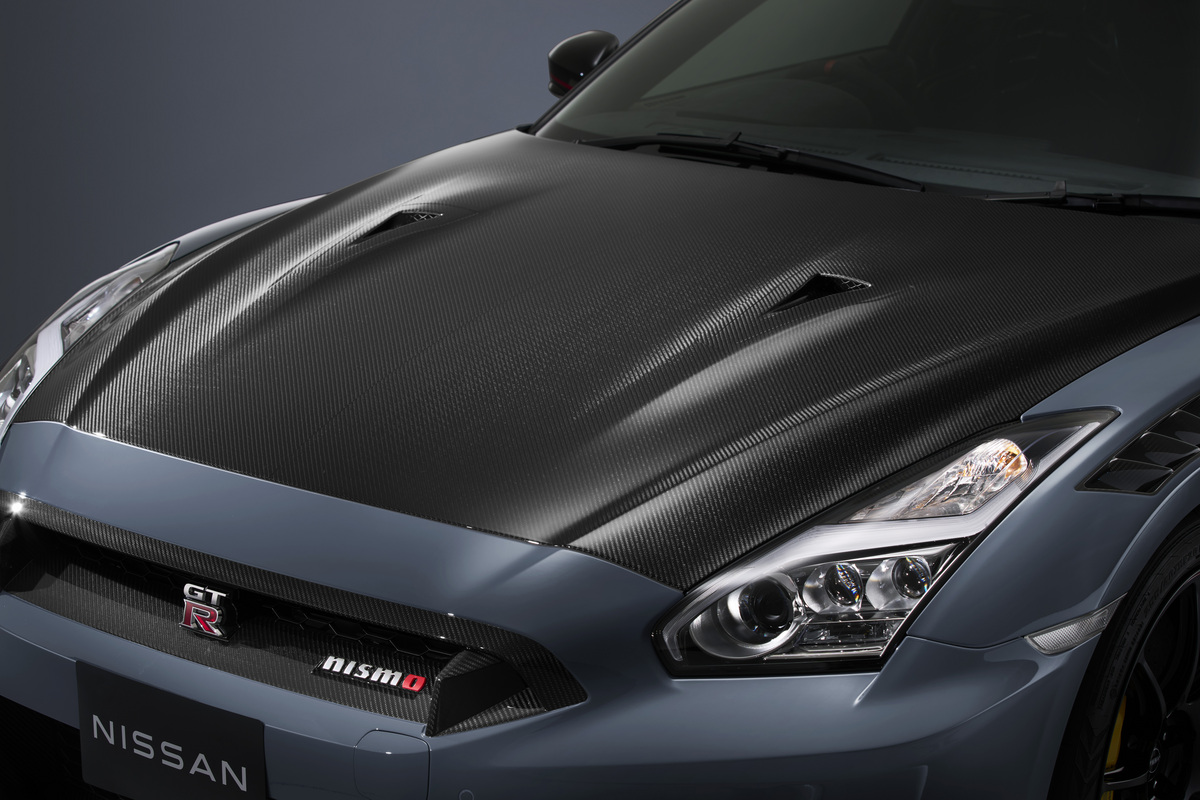
- Carbon roof, trunk lid, engine hood, and widened front fenders shave meaningful weight without sacrificing rigidity
- Bonded-body construction — a NISMO specialty — allows tighter chassis tuning than a standard welded shell
- Adaptive Shift Control’s R-mode is tuned to downshift proactively under braking, sharpening corner entry and reducing understeer
- Direct lineage to Nissan’s works racing programs, right down to the aero and suspension development process
CONS
- Six-speed dual-clutch gearbox is showing its age against newer double-clutch units from rivals
- Carbon-ceramic brakes and NISMO-specific hardware push pricing well past the standard GT-R
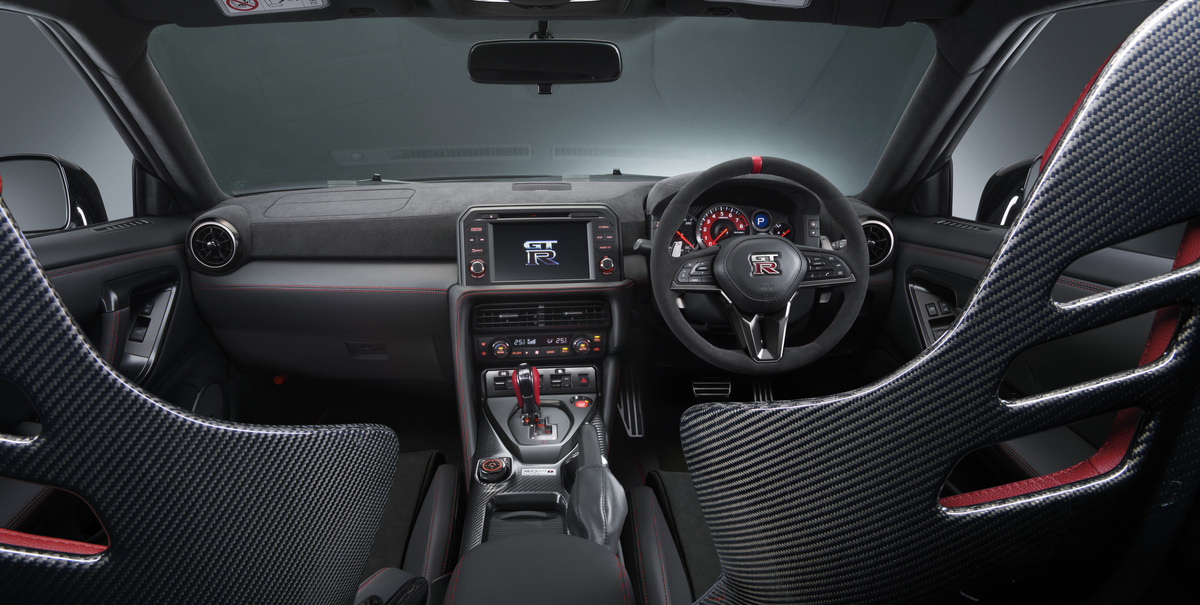
- Cabin tech, while improved, still trails segment leaders on display quality and software polish
- Reports suggest current-generation production is winding down, so parts and dealer allocation may tighten
EXTERIOR DESIGN
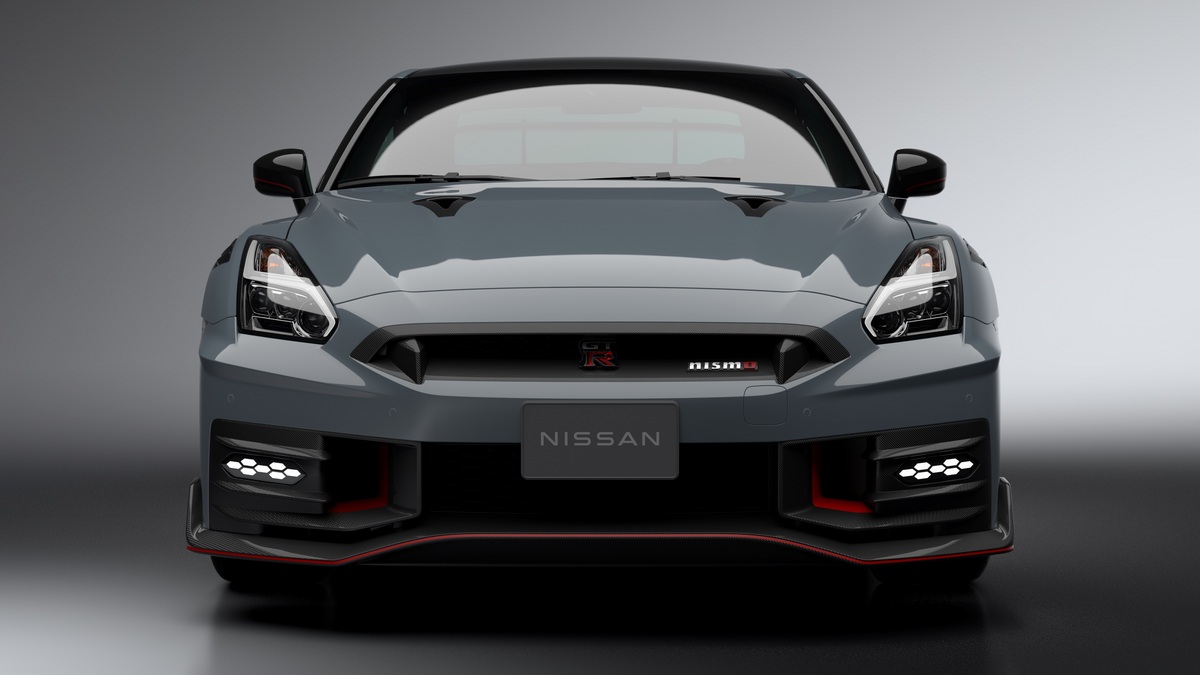
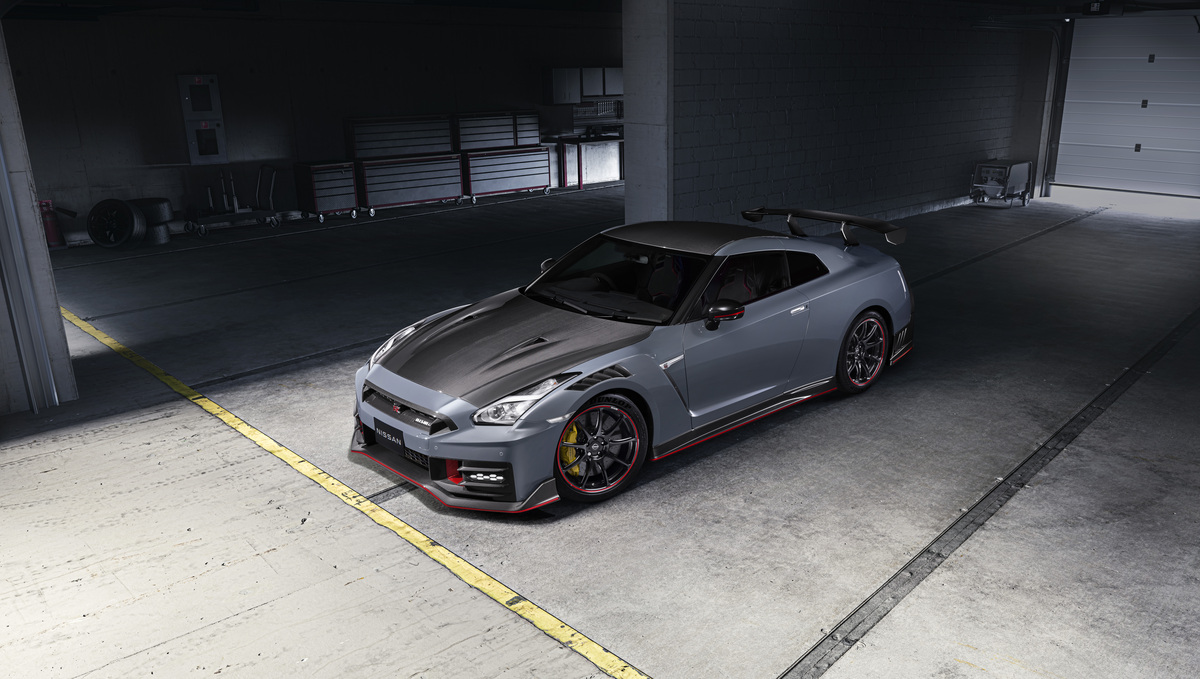
The GT-R NISMO’s bodywork is styled around aerodynamics first, with every panel change tracing back to SUPER GT development. Up front, a reshaped grille, lip spoiler, and canards build downforce without choking cooling, while a tighter grille-and-mesh design shrinks the intake opening without adding lift.
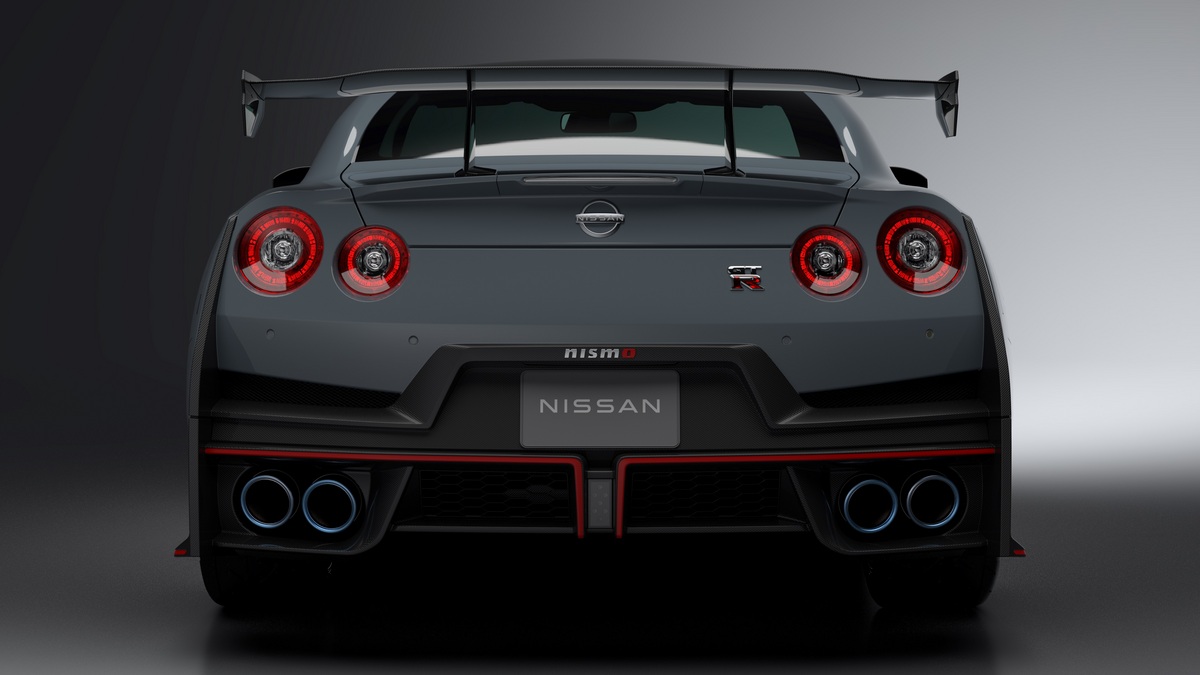
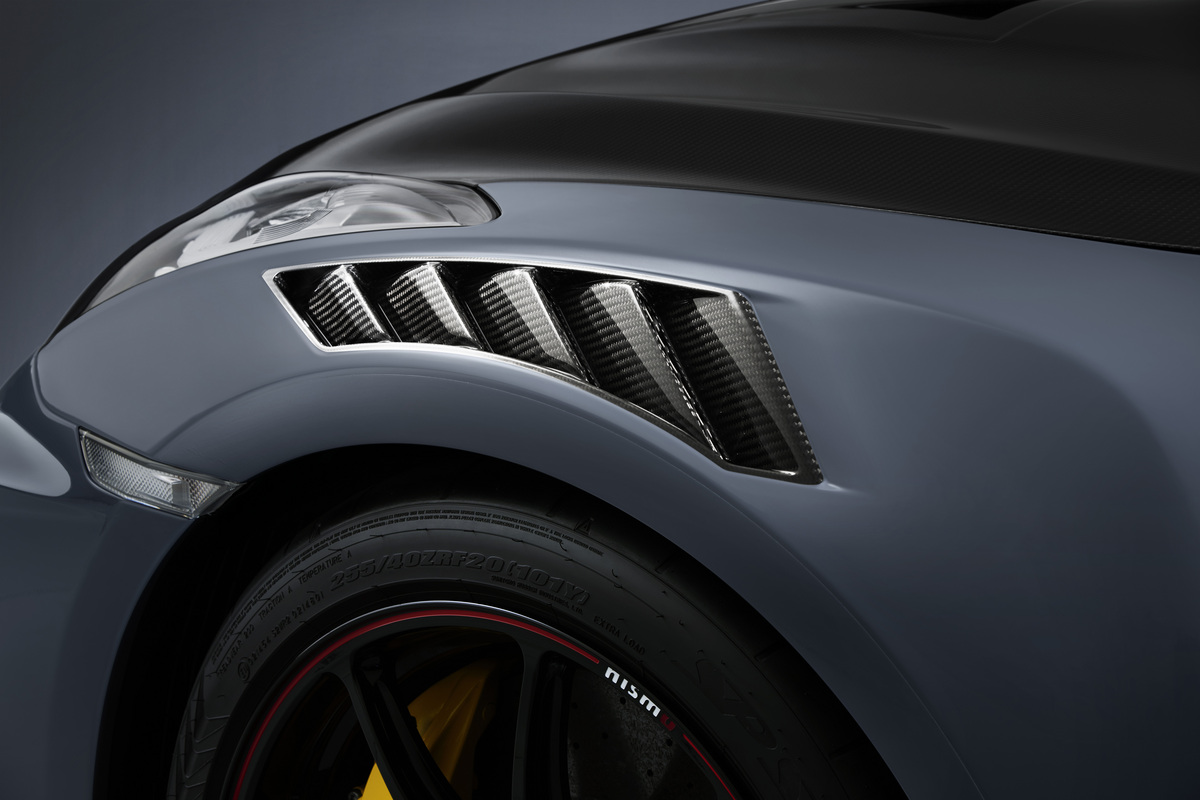
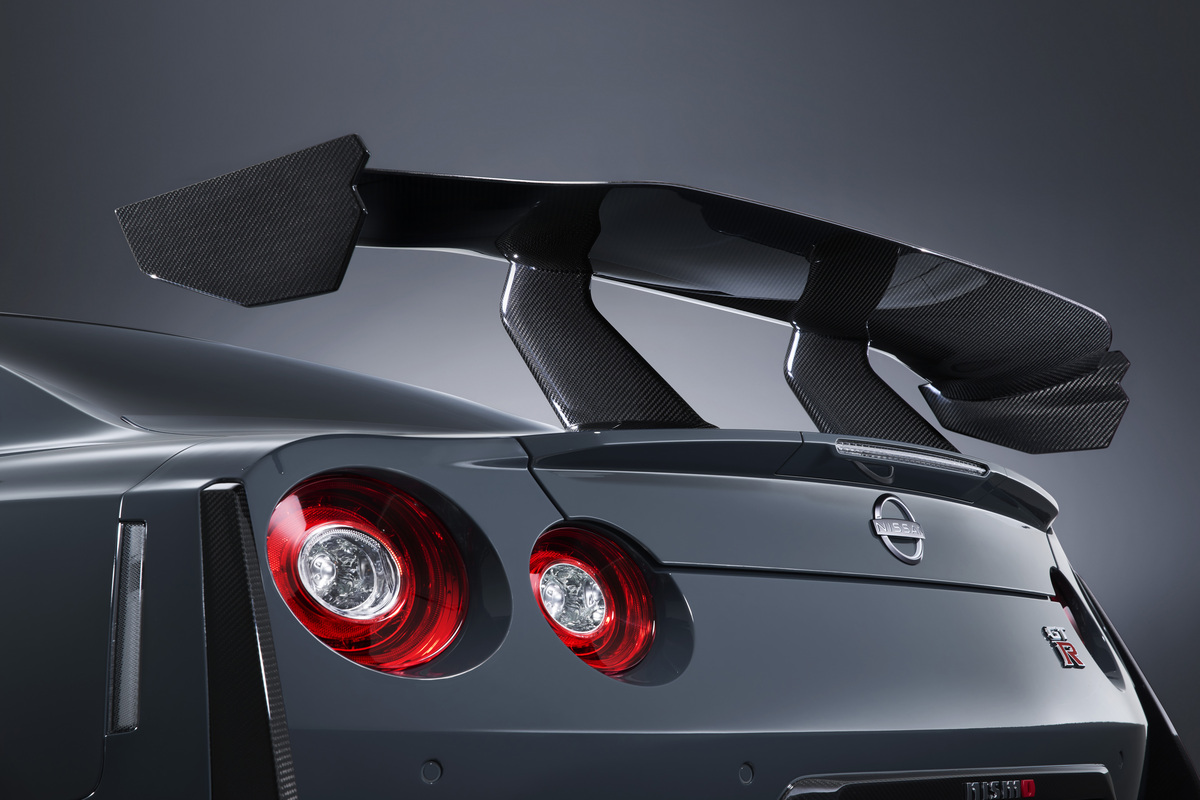
Out back, a NISMO carbon rear wing rides on swan-neck stays for cleaner underside airflow, and a new trunk spoiler with reworked bumper sides tames the turbulence it leaves behind. The widened carbon front fenders pull double duty too — upper and rear outlet ducts vent engine-bay heat while lowering surface airflow speed, adding front downforce in the process.
ENGINEERING & TECHNOLOGY
Turbochargers
A pair of NISMO-specific GT3 turbos, built with IHI, sit at the heart of the response gains — fewer, thinner turbine blades cut rotating inertia for quicker spool-up, with fresh fluid-dynamics and stress simulations used to recover the boost that a lower blade count would normally cost. Special Edition engines add precision-balanced piston rings, connecting rods, and a crankshaft, marked with their own aluminum nameplate.
Engine
The NISMO-tuned VR38 V6 makes 600 PS (441 kW), aided by cylinder-by-cylinder ignition timing and a dedicated injector driver circuit that chase output without giving up emissions compliance. A pressurized coolant reservoir supports sustained track use, and a lightweight FUJITSUBO titanium exhaust with hand-finished blued tips adds both a weight saving and a distinct note.
Front Mechanical LSD, Suspension, Wheels & Tires
A new front mechanical LSD limits inside-wheel spin and, paired with retuned ATTESA E-TS logic shifting more torque forward, sharpens corner-exit acceleration. Wide, optimized-profile tires maximize contact patch, matched to dedicated springs, dampers, and stabilizers for stronger road-holding and steering linearity at speed. Special Edition cars add forged RAYS wheels with a red rim accent.
Adaptive Shift Control — R-Mode
The R-mode shift schedule now downshifts proactively under braking ahead of a corner, sharpening turn-in and cutting understeer, then holds the engine in its most responsive band on exit for a noticeably more aggressive corner-to-corner pace.
Brakes
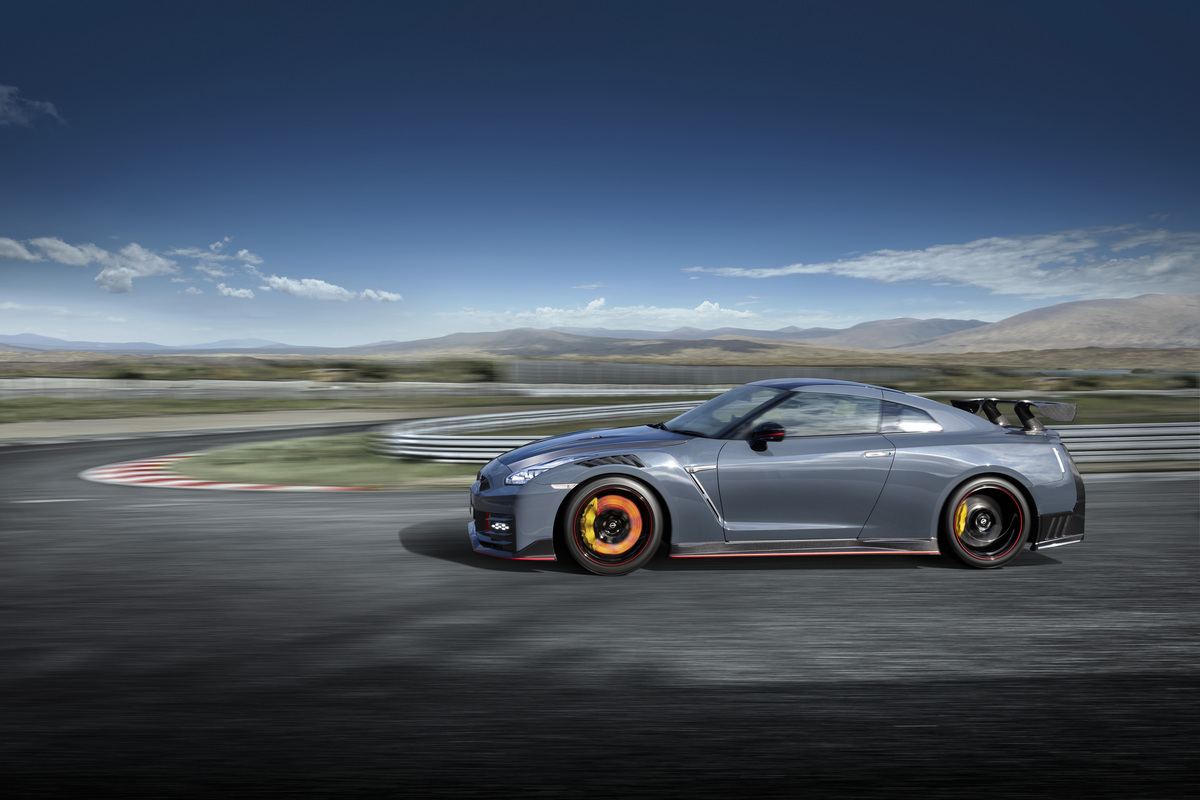
Nissan’s carbon-ceramic setup (NCCB) uses silicon-carbide rotors — 410mm front, 390mm rear — with a stiffer bridge-style front caliper and a new pad compound for both track-level fade resistance and everyday modulation. Reshaped fender protectors boost brake cooling without adding drag, and pedal geometry was revised for maximum leverage at a natural braking angle.
ENGINE & PERFORMANCE
VR38DETT, NISMO-specific tune, DOHC twin-turbo V6
Bore × stroke: 95.5 × 88.4mm, 3.799L, 9.0:1 compression
441 kW (600 PS) @ 6,800 rpm
652 N·m / 66.5 kgf·m (481 lb-ft) @ 3,600–5,600 rpm
GR6 dual-clutch transmission (final-drive-integrated transaxle)
Premium unleaded only, 74L tank
CHASSIS & WEIGHT
Curb weight: 1,720 kg / GVW: 1,940 kg
Bonded-body construction with reinforced front window frame
Suspension: independent double-wishbone (front) / independent multi-link (rear)
Ventilated disc brakes front and rear
Electric power-assist rack-and-pinion steering
Minimum turning radius: 5.7m
DIMENSIONS & WEIGHT
Length: 4,700 mm / Width: 1,895 mm / Height: 1,370 mm
Wheelbase: 2,780 mm
Front/rear tread: 1,600 / 1,600 mm
Ground clearance: 110 mm
Interior (L×W×H): 1,730 × 1,475 × 1,095 mm
Seating: 4 (2+2)
DRIVETRAIN & TIRES
Full-time 4WD, ATTESA E-TS
Tires: 255/40ZRF20 (101Y) front / 285/35ZRF20 (104Y) rear
Gear ratios: 1st 4.056 / 2nd 2.301 / 3rd 1.595 / 4th 1.248 / 5th 1.001 / 6th 0.796 / reverse 3.383
Final drive: 3.700
COMPETITORS

Mercedes-AMG GT 63 S E Performance— ★★★★☆ 9.0/10closest rival in outright hybrid performance, though it leans harder into GT comfort than outright agility
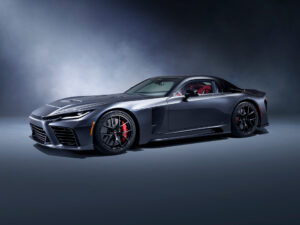
Toyota GR GT — ★★★★★ 9.3/10. TGR’s upcoming road-legal race car, aiming squarely at the GT-R’s motorsport-first territory.
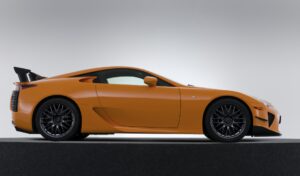 Lexus LFA — ★★★★★ 9.5/10 The spiritual predecessor — Toyota Group’s last V10 flagship, and a direct influence on the GR GT’s development philosophy.
Should You Buy the Nissan GT-R NISMO?
If you want a car that still drives like it was built by a race team rather than a marketing department, the GT-R NISMO remains one of the last of its kind — heavily bonded, carbon-bodied, and tuned around motorsport-derived hardware rather than badge power.
✅ Buy it if:
- You want motorsport-derived engineering over outright luxury
- You value carbon-ceramic braking and front-LSD sharpness
- You’re comfortable with an aging (but proven) dual-clutch gearbox
❌ Skip it if:
- You want the newest cabin tech in the segment
- You need a car that’s easy to option and easy to find on a lot
- You’d rather wait and see what replaces the GT-R next