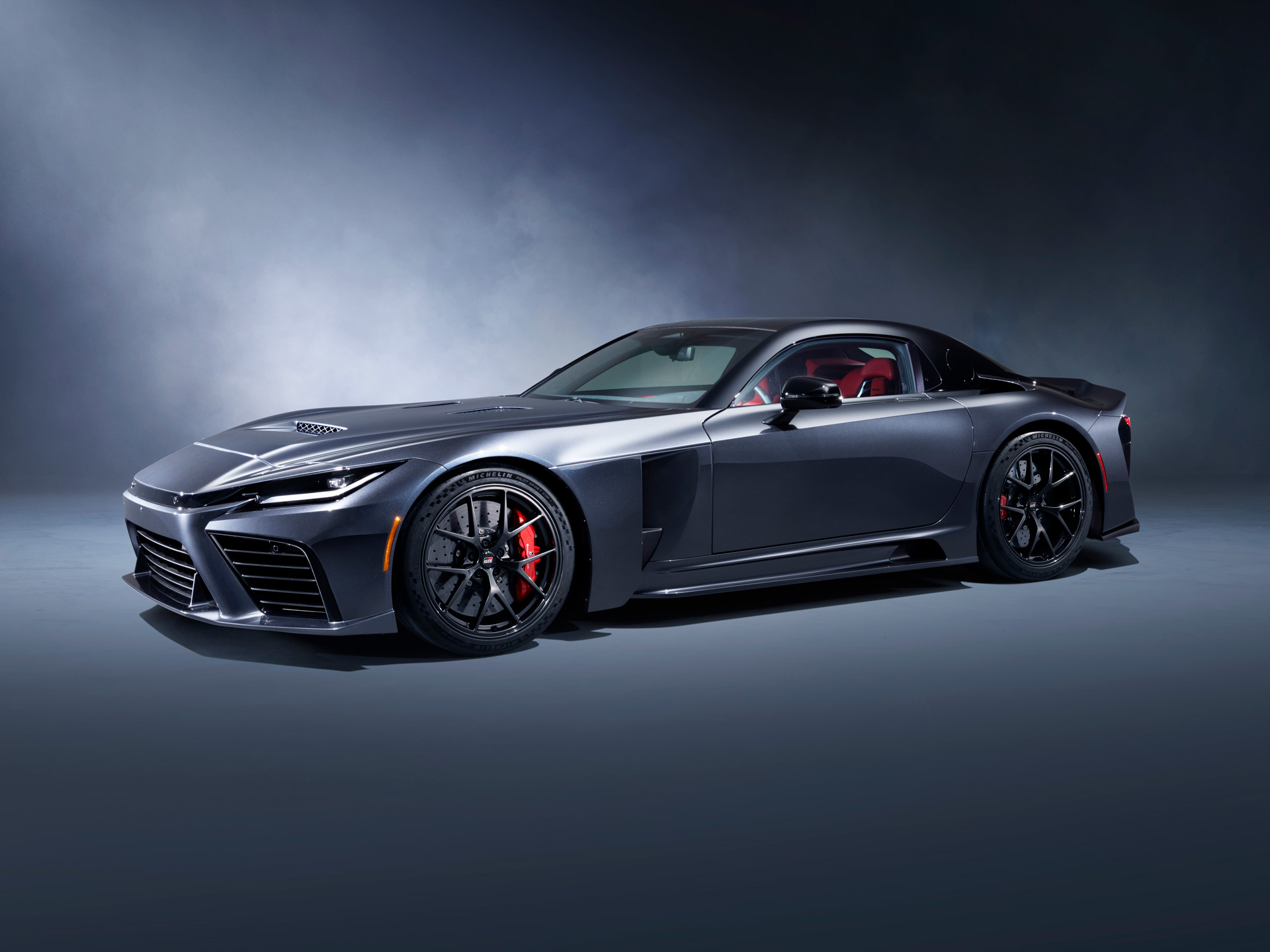
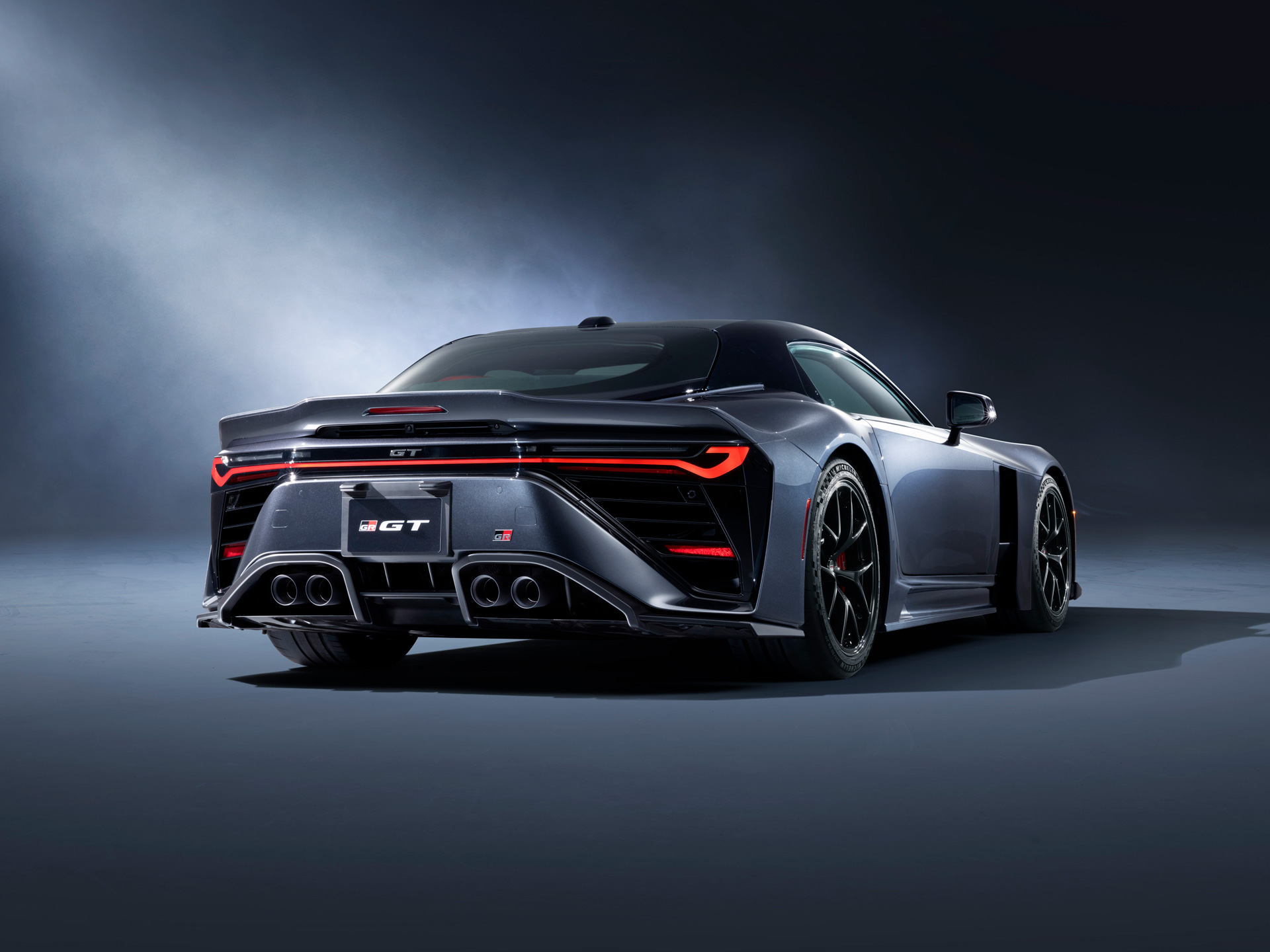
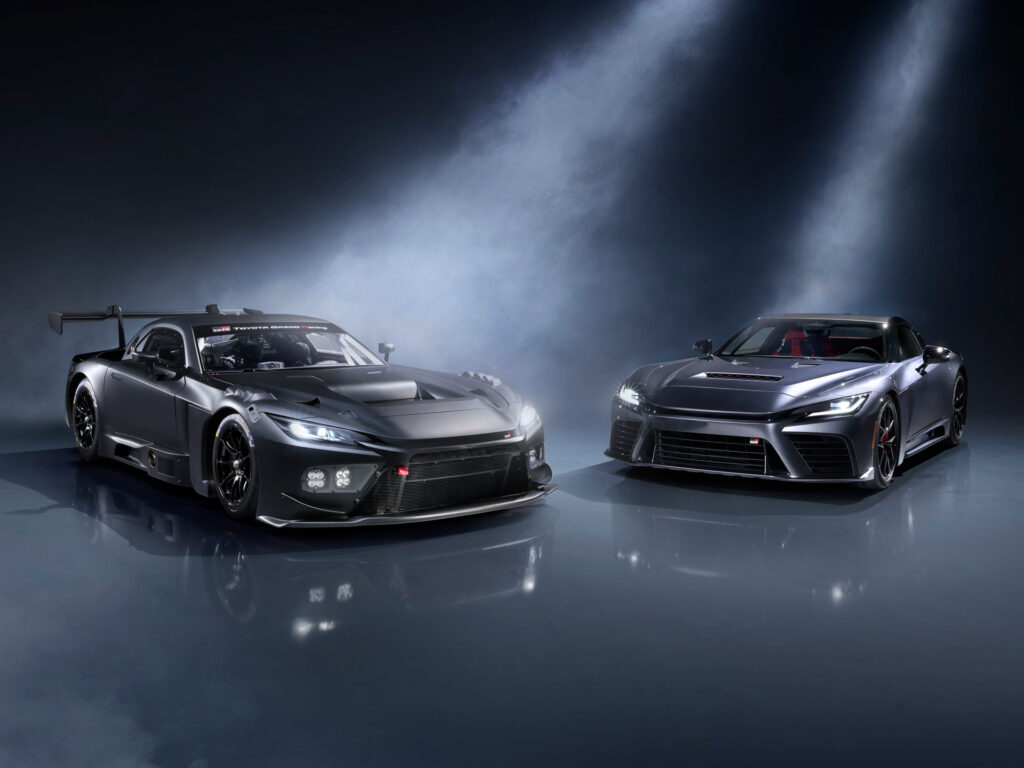
The Toyota GR GT is TGR’s new flagship road-legal race car, built around Toyota’s first all-aluminum body frame and a newly developed 4.0-liter V8 twin-turbo hybrid targeting 650+ PS.
PROS
- Toyota’s first all-aluminum body frame, paired with CFRP panels for a strong yet light structure
- New 4.0L V8 twin-turbo hybrid targeting 650+ PS and 850+ Nm
- Aerodynamics-first design process, developed jointly by FIA WEC aero engineers and exterior designers
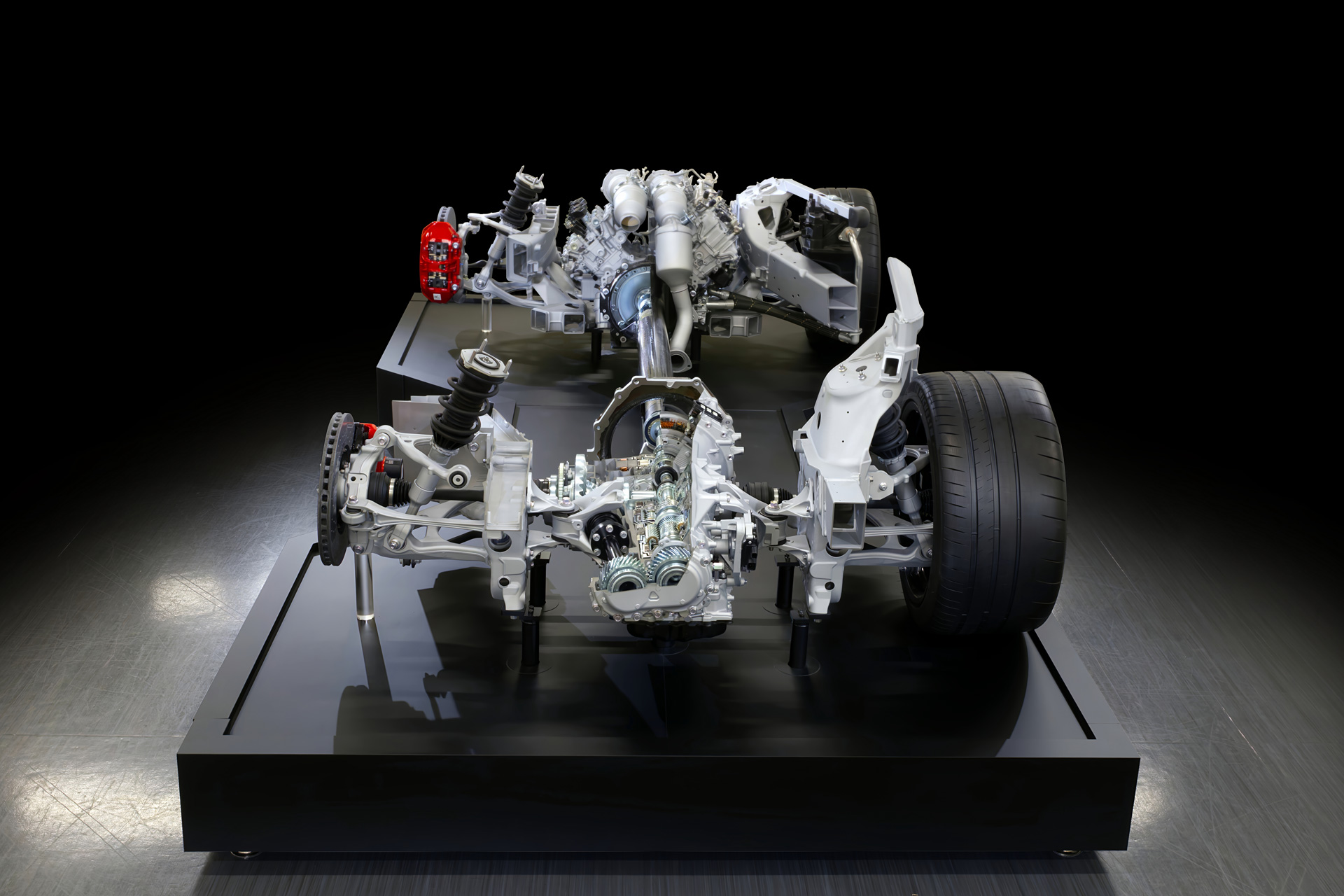
- Near-even 45:55 front-rear weight distribution with a rear-mounted transaxle
- Direct motorsport DNA shared with the GT3-spec GR GT3 race car
- Multi-stage Vehicle Stability Control lifted from TGR’s Nürburgring 24-hour race cars
CONS
- Still a prototype — final specs, pricing, and equipment are subject to change
- Not expected to reach customers until around 2027
- Likely limited-run availability given its halo-model positioning
- Emissions-compliance development still ongoing for road-legal sale
Overall Rating (Preview — Prototype)
EXTERIOR DESIGN
The GR GT flips Toyota’s usual design process on its head. Rather than styling the body first and chasing aerodynamics afterward, TGR’s aero engineers — several with FIA WEC experience — worked alongside exterior designers from day one, establishing an ideal aerodynamic “model” before a single styling line was drawn. With a top speed target north of 320 km/h, that order of operations wasn’t optional. The result is a low, wide silhouette shaped as much by cooling and downforce needs as by design intent, sitting on a chassis engineered around the lowest possible center of gravity — heavy components like the dry-sump V8 and rear transaxle are packaged low and central, with the driver’s seating position lowered to nearly match the car’s own center of mass.
INTERIOR & COMFORT
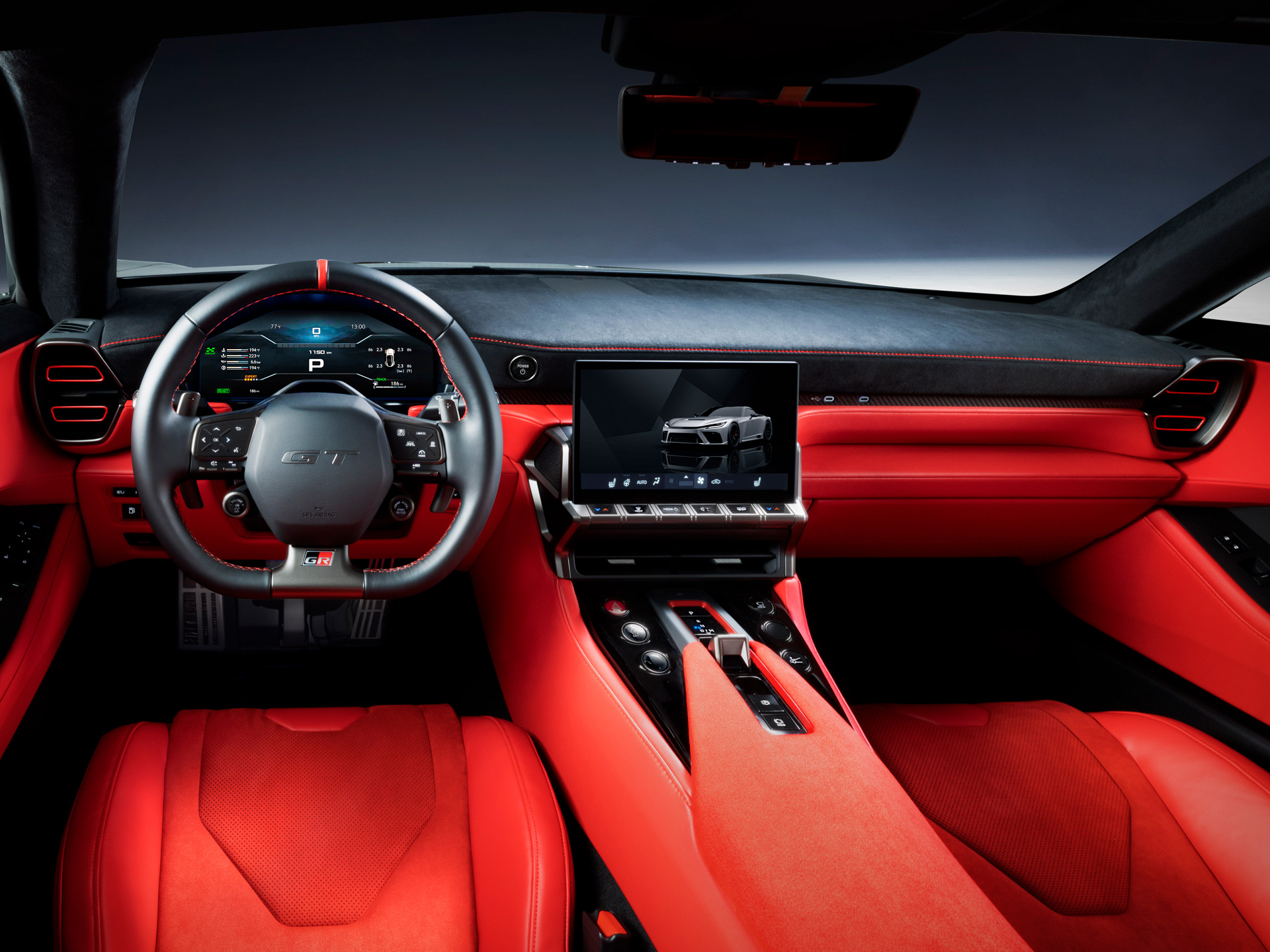
Inside, the GR GT is unapologetically driver-first. Development prioritized seating position and outward visibility above all else, aiming for a cockpit that works equally well on a track day and a daily commute. Switchgear is clustered tight around the steering wheel and shaped for eyes-off operation, while the TFT LCD instrument cluster — including shift-up and gear indicators — went through repeated iteration to stay legible at race pace. It’s a cabin built for professional drivers first, then adapted for everyone else.
ENGINE & PERFORMANCE
4.0L V8 twin-turbo hybrid
Single-motor hybrid, transaxle-integrated
650 PS+ / 850 Nm+ (system, target)
Newly developed 8-speed automatic
CHASSIS & WEIGHT
All-aluminum body frame (Toyota-first)
1,750 kg or lower (target)
45:55 front-rear weight distribution
DIMENSIONS
Length: 4,820 mm
Width: 2,000 mm
Height: 1,195 mm
Wheelbase: 2,725 mm
DRIVETRAIN & BRAKES
Front-engine, rear-wheel drive
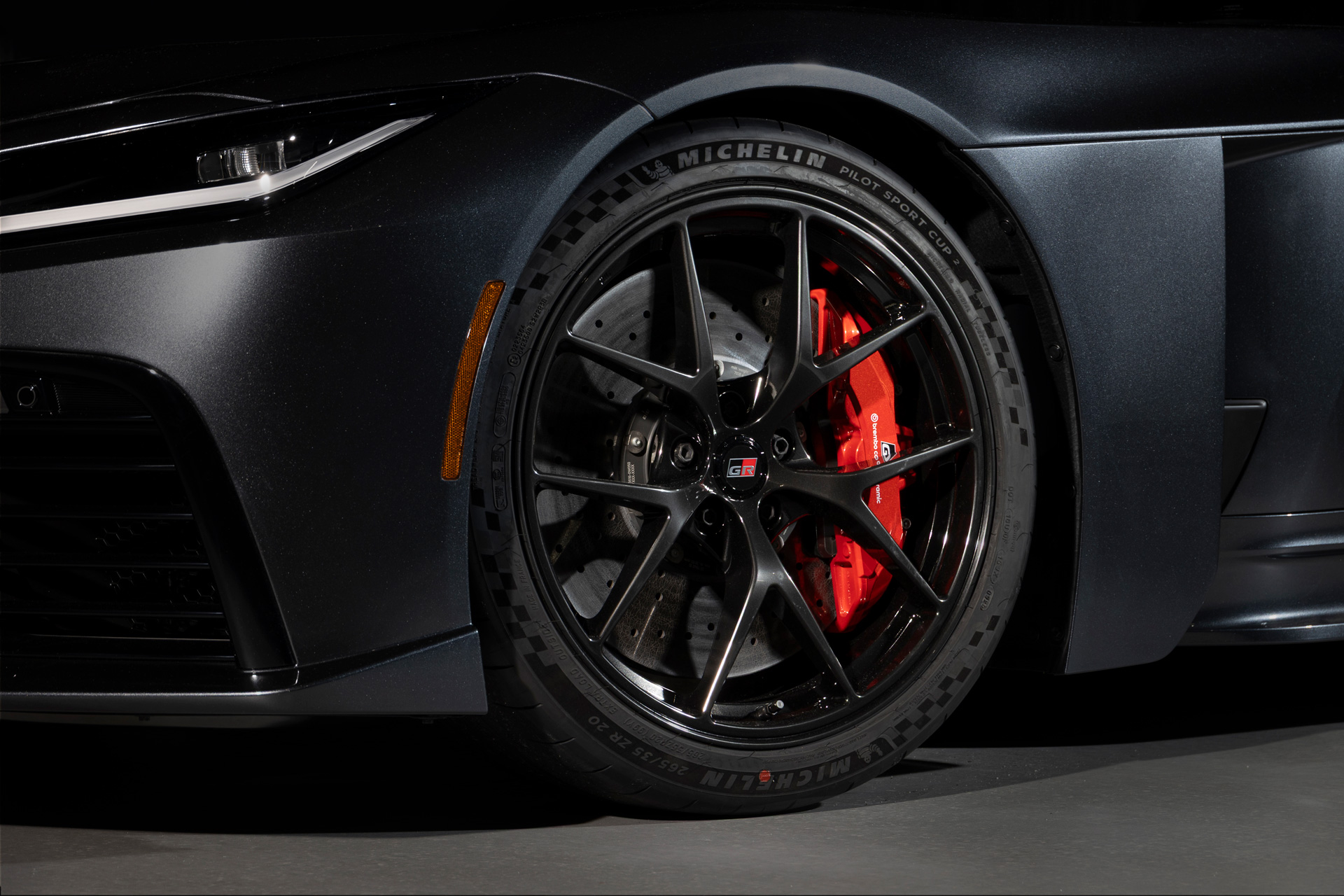
Carbon ceramic brakes (F/R)
Top speed: 320 km/h+
Tires: 265/35ZR20 (F), 325/30ZR20 (R)
ENGINEERING & TECHNOLOGY
Powertrain
- Hot-V turbo layout with dry-sump lubrication
- CFRP torque tube to rear-mounted transaxle
- Wet-start clutch replacing a torque converter
- Mechanical limited-slip differential
Chassis & Suspension
-
- Low-mounted double-wishbone suspension, front and rear
- Forged aluminum control arms
- Bespoke Michelin Pilot Sport Cup 2 tires
- Multi-stage Vehicle Stability Control, shared with TGR’s Nürburgring 24h race cars
Cabin Tech
- TFT LCD instrument cluster with race-honed shift/gear indicators
- Intuitive, wheel-adjacent switchgear
- Driver-first ergonomics carried over from Lexus LFA development know-how
COMPETITORS

Porsche 911 Turbo S — ★★★★☆ 9.0/10 Benchmark all-weather supercar performance with everyday usability. Read Review →

Nissan GT-R — ★★★★☆ 8.6/10 Japan’s long-running supercar icon, now entering its final chapters.
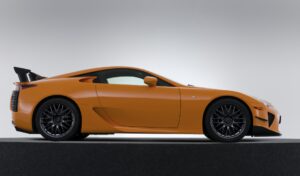
Lexus LFA — ★★★★★ 9.5/10 The spiritual predecessor — Toyota Group’s last V10 flagship, and a direct influence on the GR GT’s development philosophy.
Should You Buy the Toyota GR GT?
If you want a road-legal race car built around a driver-first philosophy — one that carries direct motorsport DNA from Toyota’s Nürburgring and WEC programs — the GR GT is shaping up to be a genuine halo car worth the wait. It’s for buyers who value engineering purity and exclusivity over instant availability.
✅ Buy it if:
- You want a true driver-first, road-legal race car
- Motorsport pedigree and exclusivity matter to you
- You value chassis engineering over outright badge power
- You’re willing to wait for a ~2027 launch
❌ Skip it if:
- You need a car with confirmed pricing and specs today
- You want maximum everyday comfort and practicality
- You’re not interested in a limited-run halo model
- You want something available right now, not in 2027